Fluid Extractors, Oil Extractor Pumps, and Fluid Transfer Pumps: A Practical Guide to Cleaner, Faster Maintenance
Whether you are changing engine oil in a home garage, servicing a marine engine, maintaining a fleet of work vehicles, or managing fluids on a small farm, the right equipment can turn a messy, time-consuming task into a controlled and efficient process. Fluid extractors, oil extractor pumps, and fluid transfer pumps are designed to move liquids safely and cleanly, but they are not interchangeable. Understanding how each tool works—and where it performs best—helps you choose the right solution for the job.
Why the Right Fluid Handling Tool Changes the Job
Spills are more than an inconvenience. Oil, coolant, transmission fluid, and hydraulic fluid can damage surfaces, create slip hazards, and complicate disposal. A well-matched pump reduces contact with the fluid, minimizes waste, and makes routine maintenance more predictable. Instead of balancing drain pans and improvised funnels, you can use a purpose-built tool that stores, extracts, and transfers fluid with far greater control.
The key is to match the tool to the fluid type, volume, viscosity, and location. A small manual extractor may be perfect for a motorcycle engine, while a larger powered unit might be necessary for a boat, tractor, or industrial gearbox. The same logic applies to transfer pumps: some are built for occasional use, while others are designed for repeated, high-volume movement.
Fluid Extractors: Precision Without the Mess
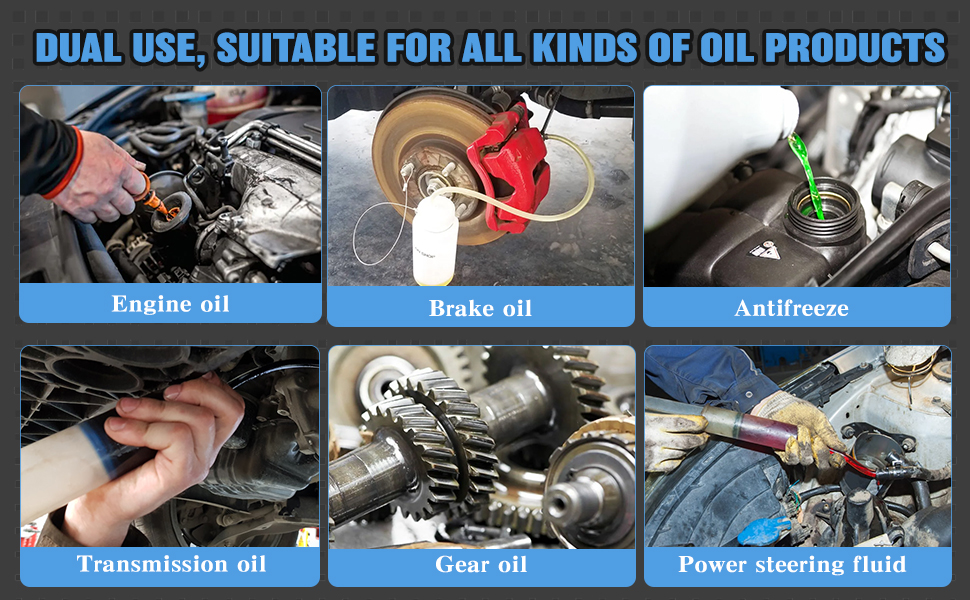
A fluid extractor is a vacuum-based or manual pump system that pulls fluid out of a reservoir through a tube. It is especially useful when the drain plug is difficult to reach, when the equipment cannot be easily lifted, or when you want to avoid removing a drain bolt altogether. Fluid extractors are common in automotive, marine, and small-engine maintenance because they allow technicians and DIY users to remove oil, transmission fluid, brake fluid, and other liquids with minimal spill risk.
Where fluid extractors shine
- Engines with hard-to-reach drain plugs: Extract oil from the dipstick tube or fill port when underneath access is limited.
- Marine and powersports equipment: Remove oil from inboard engines, jet skis, and motorcycles where space is tight.
- Workshop cleanliness: Keep fluid contained in a sealed tank instead of open pans.
- Routine sampling: Draw small amounts of fluid for inspection without a full drain.
Capacity matters. Small extractors are easy to store and ideal for one-person use. Larger models hold more fluid and often include a built-in pour spout or discharge hose for easier emptying. Also check tube diameter and flexibility: a tube that fits the dipstick opening snugly will usually create better suction and reduce air leaks.
Oil Extractor Pumps: Built for Engine and Gearbox Service
An oil extractor pump is a specialized type of fluid extractor focused on oil changes and similar maintenance. Many models use a manual vacuum pump, while others rely on compressed air or electric motors. The best choice depends on how often you work and how much oil you need to remove. A manual oil extractor pump is quiet, portable, and requires no power source, making it a strong option for occasional garage use. Pneumatic and electric versions can speed up repeated jobs in busy workshops.
Practical tip: Warm oil flows more easily than cold oil, but never extract fluid from an engine that is dangerously hot. Follow the manufacturer’s guidance and allow the engine to reach a safe working temperature before starting.
When shopping for an oil extractor pump, look for a secure lid seal, chemical-resistant hoses, clear or easy-to-read fill markings, and a stable base. If you plan to service multiple vehicles, consider a unit with enough capacity to handle one full oil change without constant emptying. A reliable shutoff or overflow feature also helps prevent accidental spills.
Fluid Transfer Pumps: The Versatile Workhorses
A fluid transfer pump moves liquid from one container to another. Unlike an extractor, which is often used to remove fluid from a closed system, a transfer pump is commonly used for filling, emptying, and circulating fluids. These pumps can handle oil, diesel, coolant, water, and certain chemicals, depending on their construction. Manual rotary pumps, siphon pumps, electric drum pumps, and air-operated models each serve different levels of volume and convenience.
Common fluid transfer scenarios
- Refilling equipment: Move oil from a bulk container into an engine, gearbox, or hydraulic reservoir.
- Emptying tanks and drums: Transfer stored fluids without lifting heavy containers.
- Workshop organization: Move waste oil into approved disposal containers.
- Field service: Use a portable pump to handle fluids where fixed plumbing is unavailable.
Compatibility is critical. Not every pump is suitable for every liquid. Check the manufacturer’s recommendations for seals, hoses, and internal components before using a pump with solvents, coolant, fuel, or high-temperature oil. A pump that works well with diesel may not tolerate water-based fluids, and a general-purpose transfer pump may wear quickly if used with abrasive or corrosive chemicals.
Key Features to Compare Before You Buy
Capacity and flow rate determine how much fluid you can move and how quickly. Material quality affects durability and chemical resistance. Hose length and diameter influence reach and suction performance. Power source decides whether you need electricity, compressed air, or manual effort. Finally, consider empty and storage design: a tool that is easy to clean and drain is more likely to stay reliable.
- Manual pumps: Portable, affordable, and independent of power; best for occasional use.
- Electric pumps: Faster and less physically demanding; ideal for frequent transfers.
- Pneumatic pumps: Powerful and workshop-friendly; require an air compressor.
- Vacuum extractors: Clean and controlled; excellent for oil changes and hard-to-reach reservoirs.
Maintenance and Safety Habits That Protect Your Equipment
After each use, flush or clean the pump according to the manufacturer’s instructions, especially when switching between fluid types. Store hoses straight or loosely coiled to prevent cracks and kinks. Inspect seals and connections for wear, and keep caps and lids secure to avoid leaks. Always dispose of used fluids responsibly and use appropriate gloves and eye protection. Matching the right fluid extractor, oil extractor pump, or fluid transfer pump to the task is the simplest way to keep maintenance cleaner, faster, and safer.
Final Thoughts
Fluid handling does not have to be a messy guessing game. Choose a fluid extractor for controlled removal, an oil extractor pump for routine oil service, and a fluid transfer pump for moving liquids between containers. With the right capacity, compatible materials, and a few smart maintenance habits, you can handle everyday fluid work with confidence and far less waste.